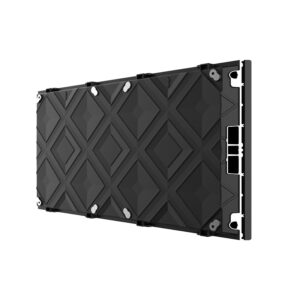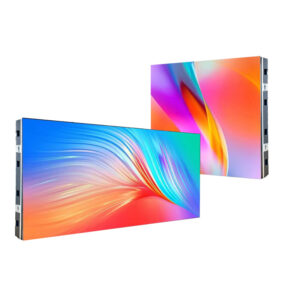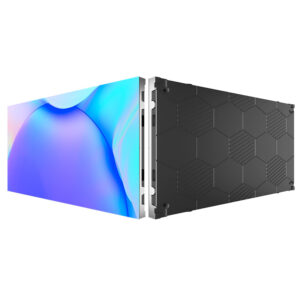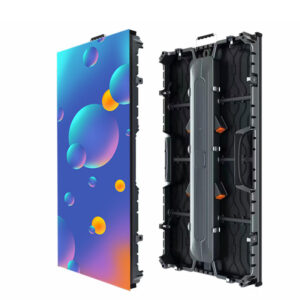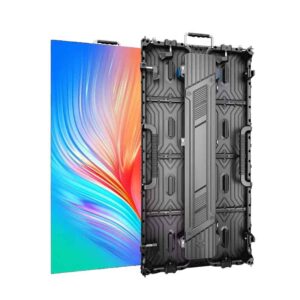
If you’re comparing LED displays for a conference room, control room, showroom, or commercial installation, you’ve probably come across two terms: COB and SMD.
Both are used in LED video walls, but they aren’t built the same way. And depending on where your screen will be installed, that difference can matter quite a bit.
COB displays are known for their protected surface and fine-pitch performance. SMD displays, on the other hand, remain a practical choice for a wide range of indoor and outdoor applications.
So, which one should you buy?
The answer depends on your viewing distance, installation environment, budget, and how the screen will be used. Let’s take a closer look.

cob led display vs led display
What Is the Difference Between COB and SMD LED Displays?
The main difference comes down to how the LED chips are packaged and mounted.
SMD (Surface-Mounted Device) uses individual LED packages mounted onto a printed circuit board. Each package contains red, green, and blue LED chips, which combine to produce the colors you see on the screen.
COB (Chip-on-Board) places multiple LED chips directly onto the circuit board and protects them with a coating layer. This creates a more integrated display surface with fewer exposed components.
Here’s a quick comparison:
| Feature | COB LED Display | SMD LED Display |
|---|---|---|
| LED structure | Chips mounted directly on PCB and protected by a coating | Individual LED packages mounted on PCB |
| Surface protection | Protected display surface | Exposed LED packages |
| Impact resistance | Generally better protection against accidental contact | More vulnerable to physical damage |
| Dust and moisture protection | Coating helps protect the LED surface; actual rating depends on the product | Depends on module and cabinet design |
| Cleaning | Smooth surface is generally easier to clean | Requires more care around exposed LED packages |
| Fine-pitch applications | Commonly used for fine-pitch indoor displays | Also available in fine-pitch configurations |
| Maintenance | Often designed for front service | Front or rear service, depending on the model |
| Cost | Often higher for comparable fine-pitch configurations | Available across a wider range of budgets |
| Typical applications | Control rooms, conference rooms, premium indoor video walls | Retail, advertising, stages, rental, and commercial displays |
One thing worth keeping in mind: COB doesn’t automatically mean better performance in every category. Refresh rate, brightness, contrast, serviceability, and reliability still depend on the specific display design.
Why Are More Buyers Considering COB LED Displays?
Think about a display installed in a busy conference room or showroom.
People walk close to it. Someone might accidentally touch the screen. Technicians need to clean it or perform maintenance. During installation, modules may be handled several times.
That’s where the protected surface of a COB display becomes useful.
1. A More Durable Display Surface
Traditional SMD LED packages are exposed, which makes them more susceptible to damage from accidental contact.
COB technology protects the LED chips with a coating layer. This provides better resistance to everyday bumps and handling, making it a practical option for installations where the screen may be touched or accessed regularly.
It’s not indestructible, of course. Proper handling and installation still matter.
2. Easier Cleaning
Dust and fingerprints are common concerns for indoor LED walls, especially in public spaces.
The flatter surface of a COB display makes routine cleaning easier than working around exposed LED packages.
For control rooms, showrooms, and other environments where the display needs to look clean throughout the day, that’s a useful advantage.
3. Better Protection Against Dust and Moisture
The protective coating helps shield the LED chips from dust and everyday moisture.
However, buyers should check the actual IP rating of the complete display rather than assuming every COB screen is waterproof. A protected module surface and a fully waterproof cabinet are not the same thing.
If your project involves a humid environment or special cleaning requirements, ask the manufacturer for the exact protection specifications.
4. A Good Fit for Fine-Pitch Indoor Displays
COB technology is widely used in fine-pitch LED displays, including P0.9, P1.25, P1.5, and P1.8 configurations.
These displays are designed for applications where viewers sit or stand close to the screen and need clear images, readable text, and detailed content.
Common applications include:
- Corporate conference rooms
- Control rooms
- Command centers
- Broadcast studios
- High-end showrooms
- Indoor commercial video walls
That said, SMD technology is also available in fine-pitch formats. The right choice depends on the specific product and project requirements.
When Does an SMD LED Display Make More Sense?
COB gets a lot of attention, but SMD is still the right choice for many projects.
For example, if you’re building a large advertising screen, a stage backdrop, or a rental display, you may not need the additional surface protection that COB provides.
SMD displays offer a broad range of pixel pitches, cabinet designs, brightness levels, and price points.
They’re commonly used for:
- Indoor and outdoor advertising
- Rental LED screens
- Stage backgrounds
- Retail displays
- Shopping malls
- Large-format commercial installations
For projects where budget, screen size, and viewing distance are the main considerations, SMD can be a very practical solution.
The key is to compare products with similar specifications rather than choosing based on the technology name alone.
COB vs SMD: Which One Is Better for Your Project?
Here’s a simple way to narrow down your options.
Choose COB if:
- Your audience will view the screen from close range.
- The display will be installed in a high-traffic indoor area.
- Surface protection is an important concern.
- You want a display that’s easier to clean.
- Your project requires a fine-pitch video wall.
- Long-term handling and maintenance are major considerations.
Consider SMD if:
- You’re working with a tighter budget.
- The screen is intended for large-format advertising.
- You need a rental display that’s frequently assembled and dismantled.
- Your application requires a specific brightness or cabinet configuration.
- The additional surface protection of COB isn’t a priority.
Neither technology is universally better. The right display is the one that meets your project’s requirements without adding unnecessary cost.
What Should You Check Before Buying a COB LED Display?
If you’re sourcing COB LED displays for a project or resale, don’t stop at the pixel pitch.
A good supplier should be able to explain the complete configuration and provide the specifications you need to compare products.
Here are some questions worth asking:
1. What pixel pitches are available?
Common fine-pitch options include P0.9, P1.25, P1.5, and P1.8. Choose based on viewing distance and screen size.
2. What is the refresh rate?
A higher refresh rate can be important for camera use, broadcast, and certain professional applications. Ask for the actual specification rather than relying on a general claim.
3. What is the brightness?
Indoor displays don’t always need maximum brightness. The right level depends on ambient lighting and the viewing environment.
4. Is the display front-serviceable?
Front maintenance can be especially useful when the screen is mounted close to a wall or installed in a space with limited rear access.
5. What is the protection rating?
Ask for the IP rating of the module and the complete cabinet. Don’t assume the rating of one component applies to the entire display.
6. Can the supplier provide modules separately?
For distributors and integrators, purchasing COB modules separately may be useful for replacement, customization, or local assembly.
7. What support is available after delivery?
Confirm whether the supplier can provide technical guidance, spare parts, installation drawings, and troubleshooting support.
These details often tell you more about a product’s suitability than the technology label alone.
Maxcolor COB LED Displays: Complete Screens and Modules
Maxcolor Visual is an LED display manufacturer based in China, supplying indoor, outdoor, rental, fine-pitch, and customized LED display products for distributors, AV integrators, contractors, and project buyers.
For customers looking for COB technology, Maxcolor offers the UHD600 COB LED Display Series and Flip Chip COB LED Display Series, with fine-pitch options for indoor video wall applications.
The UHD600 series features a 600 × 337.5 mm aluminum cabinet design and front-service maintenance. Available configurations include P0.9375, P1.25, P1.5625, P1.875, and P2.34, depending on the model.
Customers can source complete COB LED displays or COB modules, depending on their project requirements.
For buyers who need a customized solution, the Maxcolor team can help review the application, screen dimensions, viewing distance, and installation conditions before recommending a configuration.
Explore our COB LED Display Series or contact Maxcolor to discuss your project.
Frequently Asked Questions
Is COB better than SMD for LED displays?
COB offers a more protected display surface and is commonly used in fine-pitch indoor applications. SMD provides a wider range of configurations and price points. Neither is automatically better for every project.
Are COB LED displays more durable?
COB displays generally offer better protection against accidental contact because the LED chips are covered by a protective layer. Actual durability still depends on the product’s construction and how it is handled.
Are COB LED displays waterproof?
Not necessarily. The protective coating can help resist dust and moisture, but the complete display’s waterproof capability depends on its design and IP rating. Always check the manufacturer’s specifications.
Is COB more expensive than SMD?
COB displays often cost more than comparable SMD products, particularly in fine-pitch configurations. However, pricing varies by pixel pitch, cabinet design, brightness, quantity, and other specifications.
Can I buy COB LED modules without the complete screen?
Yes. Some manufacturers, including Maxcolor, offer COB modules separately for customers who need replacement modules, customized assemblies, or local integration. Confirm module compatibility and technical requirements before ordering.
Which COB pixel pitch should I choose?
P0.9 and P1.25 are often considered for close-viewing applications such as control rooms and premium conference rooms. P1.5, P1.8, and larger pitches may be suitable for other indoor installations. The right choice depends on viewing distance, screen size, content, and budget.
Where can I find a COB LED display manufacturer?
When comparing manufacturers, look at their product specifications, factory capabilities, quality-control process, customization options, technical support, and ability to supply replacement parts. Request detailed specifications and a project-based quotation before making a decision.
Need Help Choosing Between COB and SMD?
Not sure which technology fits your project?
Send Maxcolor your application, screen dimensions, viewing distance, and installation environment. Our team can help you compare COB and SMD configurations and find a solution that fits your technical requirements and budget.
Contact Maxcolor Visual for COB LED display solutions, complete screens, and module supply.