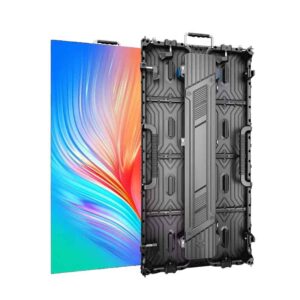
If you’ve started shopping for an LED video wall, you’ve probably noticed something pretty quickly:
Prices are all over the place.
One supplier quotes $X per square meter. Another is 30% higher. Then you find another one that’s even cheaper.
So which one is actually a good deal?
The short answer is: you can’t tell from the price alone.
An LED video wall isn’t just a bunch of LED panels. The pixel pitch, cabinet, brightness, control system, installation, and even where the screen is going can all change the final price.
Here’s what we usually tell customers when they ask us about LED display cost.

LED Video Wall Cost
Start With the Screen You Actually Need
Before talking about price, figure out what you’re buying.
A P1.25 indoor LED wall for a conference room is in a completely different category from a P5 outdoor advertising screen.
The same goes for a rental LED screen used for concerts and a fixed LED display mounted on a building.
For example, if you’re putting a screen in a conference room and people are sitting 6 or 8 feet away, you may want a fine-pitch display.
If you’re putting a large screen on the side of a building, people might be looking at it from across the street.
You don’t need the same pixel pitch.
This is one of the easiest ways to avoid spending more than you need to.
Pixel Pitch Can Change the Price Quite a Bit
Pixel pitch is one of the first things you’ll want to look at when comparing LED screen prices.
P1.25, P1.56, P1.86, P2.5, P3.91, P5…
The smaller the number, the more pixels are packed into the display. That usually means a higher price.
But here’s where it gets interesting.
Smaller doesn’t automatically mean better.
If your viewers are standing 30 feet away, there’s little reason to pay a premium for a pixel pitch designed for close-up viewing.
On the other hand, if you’re building a high-resolution video wall for a boardroom, showroom, or control room, going too large can make the pixels more noticeable.
The best pixel pitch is the one that makes sense for the viewing distance.
Indoor and Outdoor Screens Have Different Price Tags
This one seems obvious, but it’s easy to overlook when you’re comparing quotes.
An outdoor LED display has to deal with things an indoor screen simply doesn’t.
Sun. Rain. Dust. Heat. Cold. Wind.
So outdoor displays typically require higher brightness, weather protection, stronger cabinet construction, and other features designed for outdoor use.
An indoor display usually has a different set of priorities.
Fine pixel pitch, image quality, cabinet appearance, close viewing, and easy maintenance may matter more.
So if someone gives you a very low LED display price, make sure you’re comparing it with the same type of product.
Indoor and outdoor aren’t apples-to-apples.
COB Can Cost More — But That Doesn’t Mean It’s the Wrong Choice
If you’ve been looking at fine-pitch indoor LED displays, you’ve probably come across COB.
COB LED displays protect the LED chips directly on the board. The result is a more protected display surface, which can be useful in places where the screen gets touched, cleaned, or occasionally bumped.
That’s one reason we’re seeing more interest in COB for conference rooms, control rooms, retail spaces and other close-viewing applications.
Yes, COB can cost more than a standard SMD display.
But if you’re installing a screen in a busy commercial space and durability and maintenance are important, the extra cost may make sense.
If you don’t need those features, SMD may be perfectly fine.
Don’t pay for technology your project doesn’t need.
The Cabinet Is Part of the Price, Too
Here’s something that doesn’t always show up in the first conversation about LED screen pricing:
the cabinet.
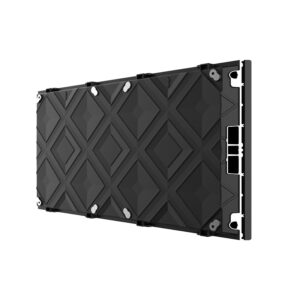
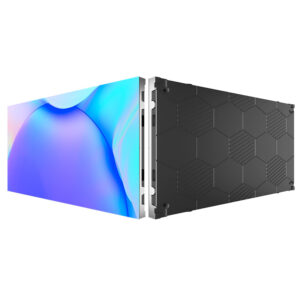
Cabinet size, weight, material and service design can all affect the cost.
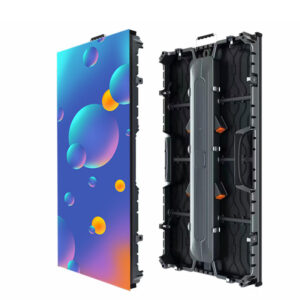
A rental LED display, for example, needs to be easy to carry, connect and take apart. A fixed outdoor display has a very different job.
For indoor installations, front-service cabinets can be especially useful when there’s no room behind the screen.
And if your team is installing dozens of cabinets, a few pounds here and there can become a pretty big deal by the end of the day.
It’s not just about what the cabinet costs.
It’s also about what it costs you to install and maintain it.
Don’t Forget the Equipment Behind the Screen
This is where some LED display quotes can get confusing.
You may see a price for the LED cabinets and assume that’s your total project cost.
Usually, it isn’t.
Depending on the project, you may also need:
- Video processor
- Sending card
- Receiving cards
- Power supplies
- Spare modules
- Mounting structure
- Control software
- Flight cases
- Cables and accessories
Some projects need very little additional equipment.
Others need quite a bit.
That’s why we recommend asking suppliers for a complete quotation, not just a price per square meter.
It makes comparing quotes much easier.
Rental Screens Are a Little Different
If you’re buying LED screens for an event rental business, don’t look at the price alone.
You’re going to move these screens.
A lot.
You’ll load them into trucks, carry them into venues, put them up, take them down, and do it all over again.
So cabinet weight, setup time, connection design and durability can matter just as much as the initial purchase price.
A slightly more expensive rental LED display may actually save you money over time if it’s faster to install and easier for your crew to handle.
Anyone who’s spent a long day moving LED cabinets will understand this one.
What About Installation?
This depends heavily on the project.
A small indoor LED wall might be relatively straightforward.
A large outdoor LED billboard is a different story.
You may need a steel structure, electrical work, lifting equipment, waterproofing, engineering, installation and commissioning.
And if you’re buying from an overseas manufacturer, shipping needs to be part of the conversation too.
So when you ask:
“How much does an LED video wall cost?”
the better question is:
“How much will my complete project cost?”
Those aren’t always the same number.
Don’t Pick the Cheapest Quote Too Quickly
We’ve seen this happen many times.
A customer gets three quotations.
Supplier A: $X
Supplier B: $X + 10%
Supplier C: $X – 20%
Supplier C looks great at first.
Then you find out the three quotations aren’t actually for the same thing.
Different pixel pitch.
Different LED components.
Different cabinet.
Different brightness.
Different control system.
Different warranty.
Maybe one includes spare parts and another doesn’t.
Always compare the specifications before comparing the price.
Otherwise, you’re not really comparing prices. You’re comparing different products.
What Should You Send a Supplier to Get a Real Quote?
You don’t need to write a technical specification document.
Just send the basics:
Screen size:
For example, 6m × 3m
Indoor or outdoor
Application:
Conference room, retail, advertising, event, stadium, etc.
Viewing distance
Preferred pixel pitch:
If you already have one in mind.
Installation:
Wall-mounted, hanging, freestanding, rental structure, etc.
Quantity
Destination country
That’s usually enough for an LED display manufacturer to give you a useful starting quotation.
And if you don’t know the pixel pitch yet, that’s fine.
Just tell the supplier the screen size and viewing distance.
They should be able to help you work that part out.
So, How Much Should You Budget?
There’s no honest one-size-fits-all answer.
A small indoor fine-pitch LED wall can have a very different budget from a large outdoor advertising display.
Your final LED video wall cost will mainly come down to:
Pixel pitch + screen size + indoor/outdoor + brightness + cabinet + control system + installation
And for a larger project, shipping and installation can make a meaningful difference as well.
The good news is that once you know those basic requirements, getting a realistic budget becomes much easier.
Need an LED Display Quote?
Maxcolor works with LED distributors, AV integrators, contractors, rental companies and project buyers looking for indoor and outdoor LED display solutions.
We supply complete LED displays as well as LED modules for customers who build their own screens.
If you’re comparing LED display prices, send us your:
Screen size + application + viewing distance + indoor/outdoor + quantity
We’ll help you work out the configuration first, then provide a quotation based on what you actually need.